
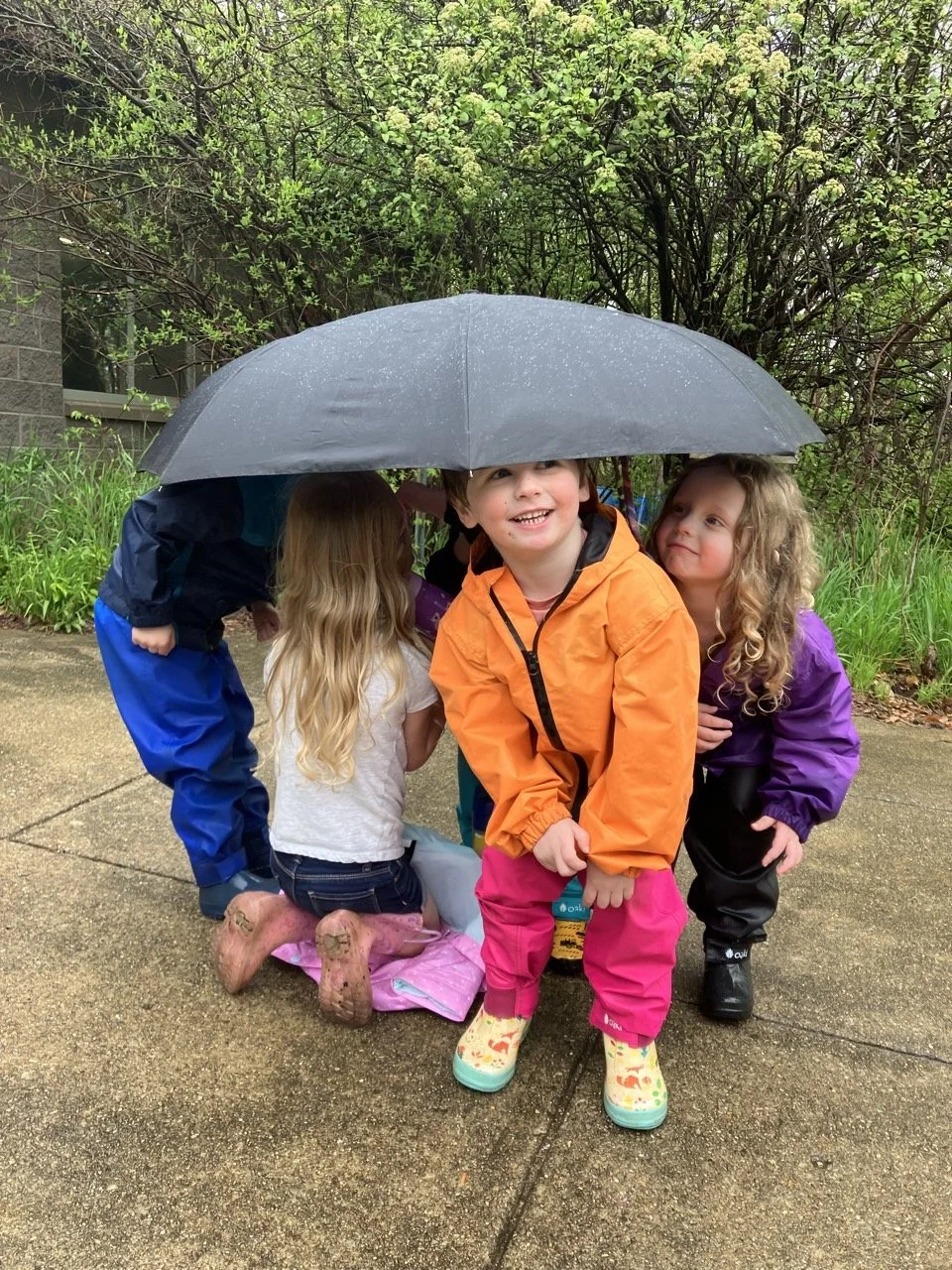
The forecast for the coming days shows more rain, but don’t let that ruin your fun! Rainy days present an opportunity for new exploration of the world around us! One of our educators, Elaine, shared some tips on ways to make the best of a rainy day.
- Make Mud Pies or play and dig in the mud: don’t be afraid to get your or your little one’s hands dirty! You might even find some crawly critters hiding along the way.
-Splash in puddles: nothing says childhood whimsy like jumping in a puddle.
- Look for frogs, toads, and salamanders: rain creates moist conditions ideal for our amphibian friends that might otherwise be hard to find.
- Look for tadpoles: spring is tadpole season, check out shallow water near you to get a peek at these young ones.
- Make Nature "soup" with rain water and natural materials: there’s never a bad time to make a potion and a surplus of water sure helps with concocting it. Collect sticks, rocks, flowers, leaves, and whatever you choose and get to brewing!
- Flip logs and rocks over to look for worms and other crawly things: many crawly critters thrive in moisture and like to hide. Take some time to explore where they may be hiding, but make sure to put everything back where you found it.
- Go on a mushroom hunt: fungi typically grow in shady, moist, nutrient rich environments. Use this opportunity to learn how fun they really are!
- Observe running water: The velocity of moving water changes with rain, see how the water near you has been impacted by this wet spell.
- Make leaf boats and send them down the creek: have a race and see whose boat wins. See what you can do to make your boat faster!
- Listen to rain "music": How does it sound when it hits different things? You can even buy a tongue drum and set it out in the rain.
- Take a "scent walk": Go on a walk and observe all the smells of the earth that are stronger in the rain (Smell that onion grass??)
- See how much rain water you can collect in a pot or a bowl: Set out a container during the rain and use it for your own measurement of the precipitation levels. Become your own meteorologist!